
“I arose pretty early,” he says. “There were 20,000 of us there. I saw a flag pole, and a flag stopped halfway.”
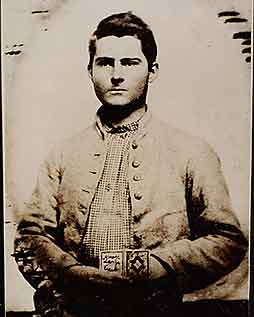
The youth, a slightly built man with bright red hair, knew what it meant. “I stuck my head in a tent and said, ‘Boys, there must be some big Yankee dead.’ ” A guard told the men later that the president had been shot. Howell says he felt no hatred toward Lincoln, only kindness.
“We didn’t fight for the preservation or extension of slavery,” he says. “It was a great curse on this country that we had slavery. We fought for states’ rights, for states’ rights.”
After the war, Howell taught at Reynoldson Institute in Gates County, N.C. He soon left teaching and went to the University of Pennsylvania, graduating with a history degree. From there, he went on to Harvard and got a doctorate in history. Howell was a history professor at the University of Arkansas. He eventually headed the department. In 1901, he was named president of Virginia Intermont College in Bristol, where he served for 50 years.
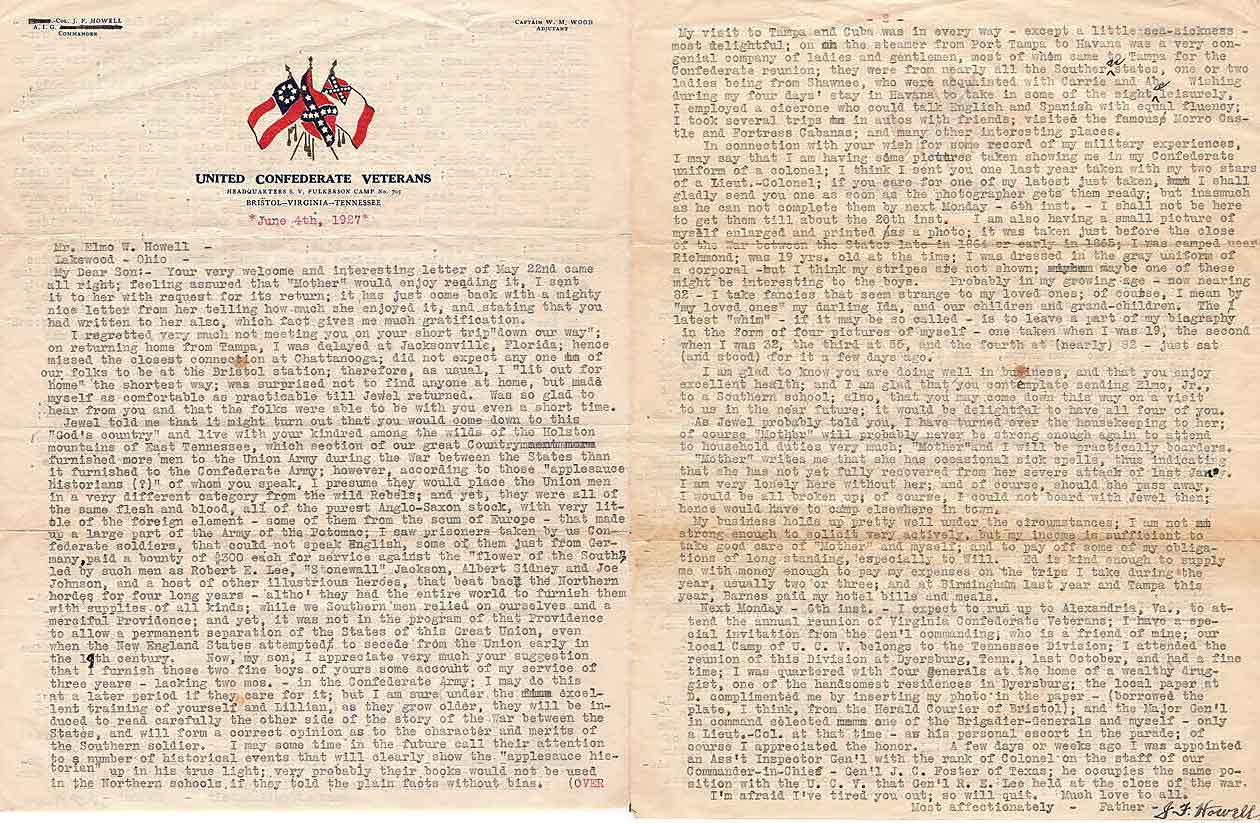
Howell was forever loyal to the South. He became state commander of the Tennessee Confederate Veterans and, in 1940, was named commander-in-chief of the national United Confederate Veterans.
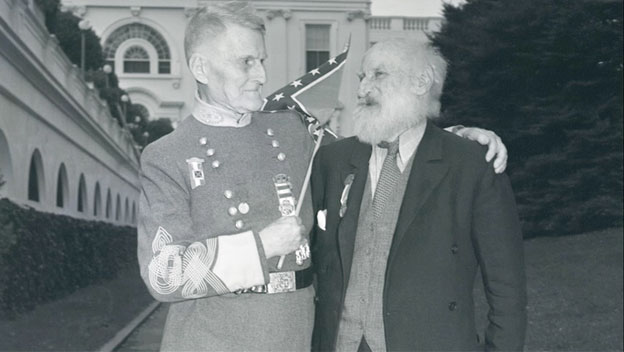
In 1942, Life magazine did a spread on Howell. Several photos of the old gentleman show him dressed in his Confederate uniform. Because legislators wanted to hear more from the Confederate veteran, Howell addressed the combined Congress of the United States in Washington in 1944, when he was 98, and that is when it is believed this tape was made.
Four years later, in February 1948, on his 102nd birthday, the city of Bristol threw a party. His old friend, actress Mary Pickford, and her family attended.
Howell, who had never been sick a day in his life, died the following June.
Julius Howell was the great-great-uncle of former ANV Commander Russell Darden.